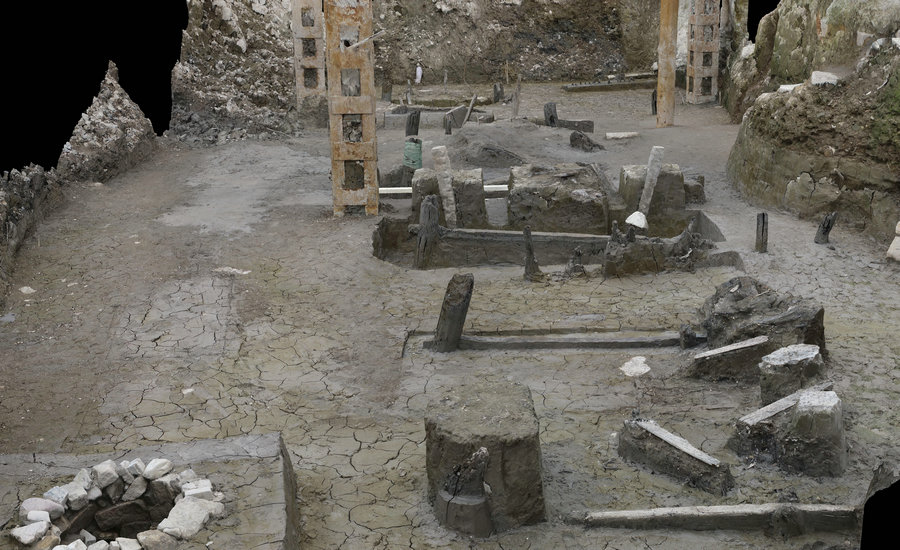
Shuomen Ancient Port Ruins Site
Introduction
The Shuomen Ancient Port Ruins Site is an archaeological find located in Wenzhou, Zhejiang province. This significant site dates back to the Song Dynasty (960-1279) and extended its prominence through the Yuan Dynasty (1271-1368). As one of the eminent ports on the ancient Maritime Silk Road, Shuomen port played a crucial role in maritime trade, especially during the peak periods of the Song and Yuan dynasties. The site includes a variety of historical remnants such as docks, wells, a wooden trestle, shipwrecks and a plethora of porcelain items, lacquerware and brick carvings. Its discovery has provided invaluable insights into the ancient maritime trade networks and the cultural exchanges that took place between China and various parts of the world. The site has been recognized for its cultural and historical importance, reflecting Wenzhou's status as a key distribution center and starting point for the exportation of Longquan celadon, a renowned Chinese porcelain.
History
During the Song and Yuan dynasties, China experienced a peak in maritime trade, bolstered by its strategic position and advancements in shipbuilding and navigation. The Shuomen port was integral to these developments, serving as a pivotal point on the Maritime Silk Road. This route facilitated not only trade but also cultural exchanges, linking China with regions across Asia, the Middle East and beyond. The port was particularly noted for its role in the export of Longquan celadon, a type of Chinese porcelain known for its exquisite craftsmanship and green glaze. Produced in the Longquan Kiln located in Zhejiang province, this celadon was highly sought after and became one of China's most successful export commodities before the Age of Exploration. Throughout the Southern Song Dynasty (1127-1279) and into the middle of the Ming Dynasty (1368-1644), Longquan celadon remained a dominant force in the global porcelain market, with Shuomen port serving as a primary hub for its distribution.
Discovery and Excavation
The Shuomen Ancient Port Ruins Site was uncovered through a series of archaeological excavations aiming to unravel the rich history of Wenzhou's maritime activities. The site includes notable finds such as architectural remnants, docks, wells and a wooden trestle, offering a glimpse into the port's infrastructure. Additionally, the discovery of shipwrecks and over 10 metric tons of porcelain items, lacquerware and brick carvings provided substantial evidence of the port's bustling trade activities. These excavations not only highlighted the scale and sophistication of the port's operations but also underscored its significance as a center for the exportation of Longquan celadon. The findings at Shuomen have been instrumental in deepening the understanding of ancient Chinese maritime trade and the dynamics of the Maritime Silk Road.
Architectural Features
The architectural features of the Shuomen Ancient Port Ruins Site reflect its historical significance and functional complexity. The site comprises various structural components, including docks, wells and a wooden trestle. These features illustrate the advanced engineering and architectural techniques employed during the Song and Yuan dynasties to support maritime trade. The docks, in particular, were crucial for facilitating the loading and unloading of goods, while the wells provided essential water resources for the settlement and visiting ships. The wooden trestle is a notable element, highlighting the ingenuity and resourcefulness of ancient Chinese port construction. Collectively, these architectural remnants offer a comprehensive understanding of the operational dynamics of an ancient port and its role in the broader trade networks of the time.
Cultural Significance
The cultural significance of the Shuomen Ancient Port Ruins Site is multifaceted, encompassing economic, historical and artistic dimensions. As a major port on the Maritime Silk Road, Shuomen played a pivotal role in the exchange of goods and ideas between China and other cultures. The site is a testament to the flourishing maritime trade of the Song and Yuan dynasties, which facilitated cultural interactions and the dissemination of Chinese art and technology. The export of Longquan celadon, in particular, exemplifies the artistic achievements of the time, with its refined aesthetics and craftsmanship gaining global appeal. The port's strategic position and function as a distribution hub for celadon underscore its importance in the cultural and economic landscape of ancient China. The archaeological discoveries at Shuomen have thus contributed significantly to the understanding of China's historical trade relations and cultural exchanges with the world.
Preservation Efforts
Preservation efforts for the Shuomen Ancient Port Ruins Site have been undertaken to safeguard its historical and cultural heritage. Recognizing the site's importance, local and national authorities have implemented measures to protect and conserve its archaeological remains. These efforts include establishing protective structures around the site, conducting detailed documentation and analysis of the findings, and promoting public awareness of its historical value. The preservation initiatives aim to maintain the integrity of the site while facilitating ongoing research and exploration.








